Purple Day 2025 – The International Day for Epilepsy.
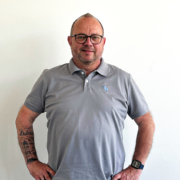
Gerret Gorholt has been working as a development engineer with us for about 4 years. One of his last major projects was the redesign of our madita. and madita-fun.! However, assistive devices are not just a professional topic for him. His interest in assistive devices began for personal reasons.
Gerret is the father of two lively girls named Ilvie and Jule. His younger daughter was born four years ago with health impairments, including epilepsy. Today, on March 26th, Purple Day, the international epilepsy awareness day, we took the opportunity to let our colleague Gerret share his story.
Gerret, how and when did you find out that your daughter has epilepsy?
The first time my wife had a slight suspicion was while breastfeeding, noticing something unusual. Jule slightly grimaced, tensed up, and repeatedly stopped drinking. At first, no one had any real suspicion, but as the incidents became more frequent, we were sent to the hospital. The next day, the head of pediatric neurology informed us that it was epilepsy.
More specifically, Jule has West Syndrome. The diagnosis was devastating for us at first. West Syndrome is considered very difficult to treat. Only 1 in 25,000 children get this form of epilepsy. The cause is still unclear, but it is likely genetically caused.
Contrary to initial expectations, West Syndrome was successfully treated with cortisone and a strong antiepileptic drug. That was a relief! However, at that point, we still couldn’t say whether our daughter had suffered any long-term damage from the seizures.
Two months later, she developed a so-called focal epilepsy as a result. However, the chances are good that with the right medication, she will remain seizure-free. At the moment, our little one is well-adjusted and has no epileptic seizures.
Epilepsy certainly has an impact on your family life, right?
The first moment was truly a shock. But we are incredibly happy that Jule has developed into such a cheerful and lively girl. After the initial diagnosis, things could have gone much worse.
That said, I want to be honest: Our family life turned 180 degrees. Simply due to the many doctor’s visits, therapies, and quick stops at the pharmacy. And we’d rather not even talk about the bureaucracy.
My wife has been primarily with the children from the beginning, and after the diagnosis, I reduced my hours at work. This way, we can manage many things together. A huge relief was when she could crawl and sit up by herself. She couldn’t do that for a long time, so she had to be carried and supported constantly. She is now four years old and developmentally delayed.
Do you receive any support? For example, in the form of assistive devices?
On one hand, we receive financial support from the health insurance due to the care level she has. On the other hand, we have a household help who comes every two weeks.
Currently, she goes to physiotherapy and early childhood development twice a week.
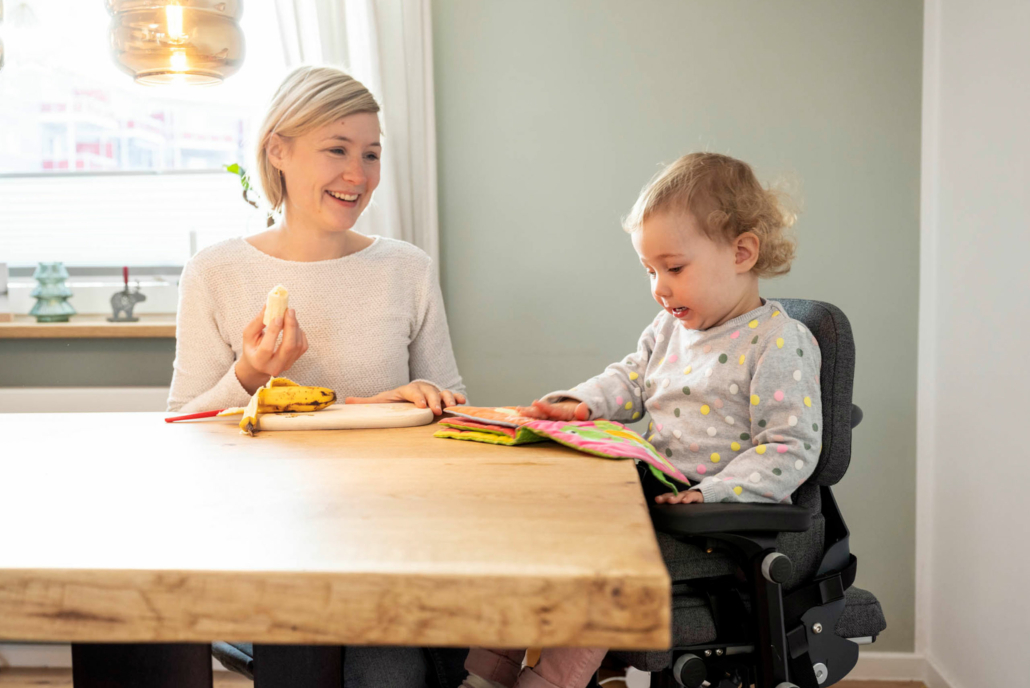
Additionally, Jule is currently using a madita-fun. in size one, a bibi. bath chair, and the piper. rehab buggy. In the car, she has a special car seat, the marie integral.. We are currently in the process of applying for the charlie integral. as her current car seat will soon be too small for her. Recently, we also received a care bed and two assistive devices for the daycare, another madita. and a second piper..
Thank you for sharing your experience! Is there anything else you’d like to share?
First of all, I think sharing experiences from parents with children with disabilities is very important. In the beginning, such a diagnosis can be very overwhelming and confusing. But if we’re honest, all parents have big and small problems with their children. Every child is individual and has unique needs, which sometimes are more intense and sometimes less intense.
They all fill your day, whether with or without a disability. My daughter Jule is just as much a blessing to our family as Ilvie. Both develop completely differently, each in their own way and at their own pace. And that’s exactly why I find experience reports from parents very important—for those who might feel overwhelmed shortly after a diagnosis.