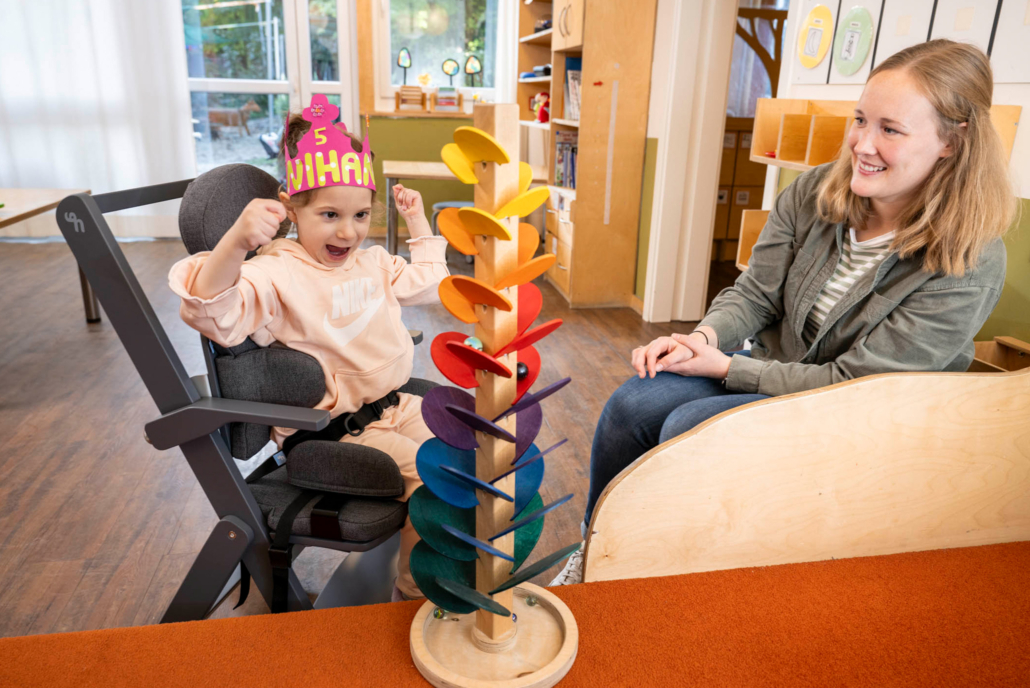
What is the therapy chair used for?
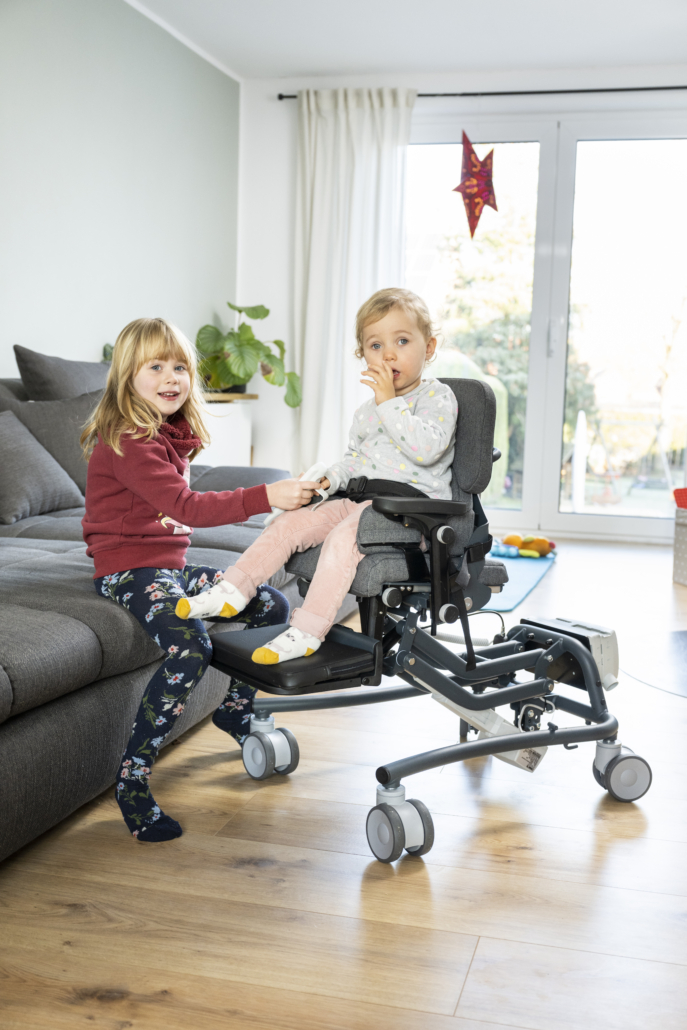
Therapy chairs for children: the most important criteria for making the right choice
A therapy chair helps children with special needs to sit comfortably and ergonomically correctly. In order to make the best possible decision for the child, various factors should be taken into account. Our structured approach helps to understand the most important aspects.
1. Different positions for different activities
Children use chairs for different activities: playing, eating, learning or relaxing. A high-quality therapy chair should therefore be flexible enough to allow different sitting positions and adapt to the child’s needs.
2. The challenge of positioning in the therapy chair
In everyday life, we often switch between different seating furniture and positions. However, children in a therapy chair often only have one seating option. This makes it all the more important that the chair is adaptable and supports a dynamic sitting posture. Variability and ergonomic customisation options are essential.
3. Flexibility of the therapy chair
- Tilt adjustment: by tilting the seat forwards or backwards, relaxation or muscle activity can be promoted. A slight forward tilt activates the trunk muscles, while a backward tilt offers more rest and comfort.
- Changing the backrest angle: To make sitting more comfortable over a longer period of time, the backrest should be individually adjustable. This supports a healthy posture.
4. Adaptation to different tables
- Optimum table height: To ensure that the child can eat, paint or play comfortably, the chair must be compatible with different table heights. Ergonomic adjustment is particularly important for fine motor skills challenges.
- Height adjustability: As the therapy chair is used in different rooms, the seat height should be easily adjustable to ensure an optimum working height.
5. Importance of the therapy chair base
- Adaptability: A flexible base makes it easier to use in different rooms such as the living room, kitchen or daycare centre. It should be easy to move without losing stability.
- Social interaction: The child’s seat height should be adjusted so that they can interact with other children or adults at eye level. This promotes social contact and also facilitates supervision by parents or carers.
- Location: Not every base fits in every environment. A model that is too large can be a hindrance in a flat, while a flexible height adjustment can be useful in a school classroom. Individual adjustments are required here.
Conclusion: The right therapy chair
A well-designed therapy chair supports the child in their everyday life by promoting a healthy sitting posture and offering individual customisation options. When choosing, pay attention to flexibility, ergonomics and adaptability to different situations. This will ensure that your child is optimally supported.
Discover our therapy chairs under Sitting + Positioning